The Fiery Return of the Noble Thong: Why Your Sunday Roast Demands Real Horseradish
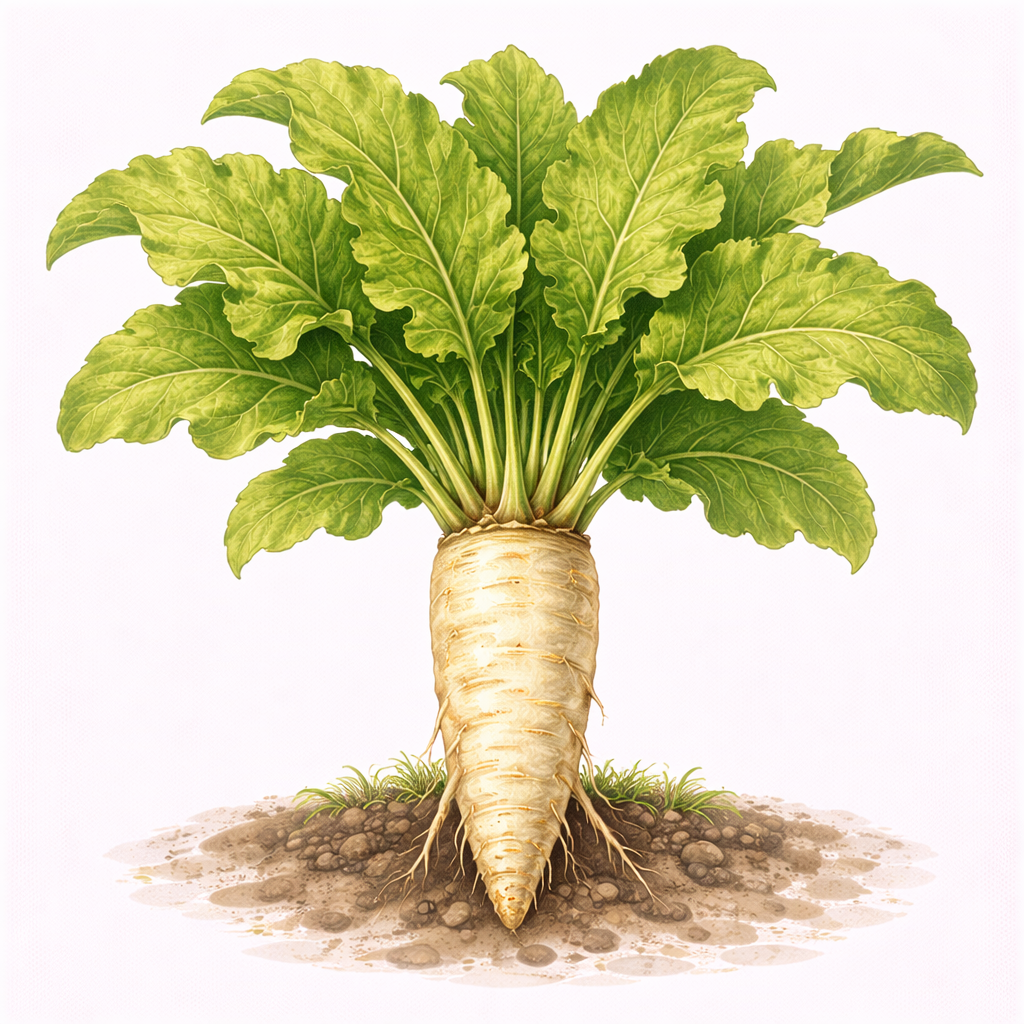
Let us be entirely honest: the watery, vinegar-soaked sludge sold in supermarket jars under the guise of "horseradish sauce" is an absolute insult to the British palate. If you are going to invest in a magnificent, dry-aged rib of beef from your local butcher, you owe it to the beast to serve it with the real deal. True horseradish (Armoracia rusticana) must be grown with intent, harvested with grit, and grated with tears in your eyes.
Reclaiming the Noble Root
Too many modern gardeners treat this majestic brassica as a weed, leaving it to colonise neglected corners of the allotment. This lazy approach yields nothing but thin, woody, bitter threads that utterly ruin a good Sunday roast. If you want thick, pungent roots worthy of a high-end carving trolley, you must employ the rigorous, traditional cultivation methods of our Victorian forebears.
Plant the 'Thongs' with Precision
Propagation is not a matter for seeds; we work exclusively with "thongs," which are pencil-thick root cuttings taken from prime stock. Late spring is your absolute deadline to get these into deeply trenched, stone-free soil. Insert them at a sharp 45-degree angle, ensuring the crown sits just five centimetres below the surface. This precise angle encourages lateral root restriction, forcing the plant's energy into one magnificent, dominant taproot.
Fire and Water
The secret to that prized, sinus-clearing heat lies in managed growth rather than neglect. When British summer temperatures climb toward a pleasant 23°C, the plants require deep, weekly watering to keep the roots succulent. Dry soil stresses the plant, resulting in a fibrous texture that is utterly impossible to grate over your rare roast beef. Keep them well-fed with a rich organic mulch early in the season to encourage leafy canopy growth.
The Ultimate Harvest
Come November, when the autumn frost finally blackens the foliage, lift the roots with a heavy-duty digging fork to avoid snapping the crown. Clean them thoroughly, grate them raw, and immediately fold them into whipped double cream with a touch of English mustard. This fiery accompaniment is designed to elevate a bloody, thick-cut sirloin steak into a culinary masterpiece. Do not settle for supermarket mediocrity when horticultural excellence is so easily dug from your own soil.
Sources
- Royal Horticultural Society: Growing Armoracia rusticana
- SowTimes Archive: Traditional Root Crop Management (1998)
Imagery Suggestion
A beautiful, Studio Ghibli-style botanical illustration of a freshly harvested horseradish plant lying on a rustic wooden potting bench. The illustration should feature a highly detailed, chunky, earth-dusted taproot with lush, vibrant green leaves fanning out. In the background, a soft-focused, warm-toned British country kitchen window lets in gentle morning light, with a traditional copper grater and a small ceramic bowl sitting nearby. The art style should have soft, hand-drawn pencil outlines, rich watercolor textures, and a nostalgic, cozy atmosphere characteristic of classic Ghibli films. This image should be saved as /plants/HORSERADISH.png.
Featured in this story
End of Article