The Rubber Revolution: Why the UK's Next Strategic Crop is a Dandelion
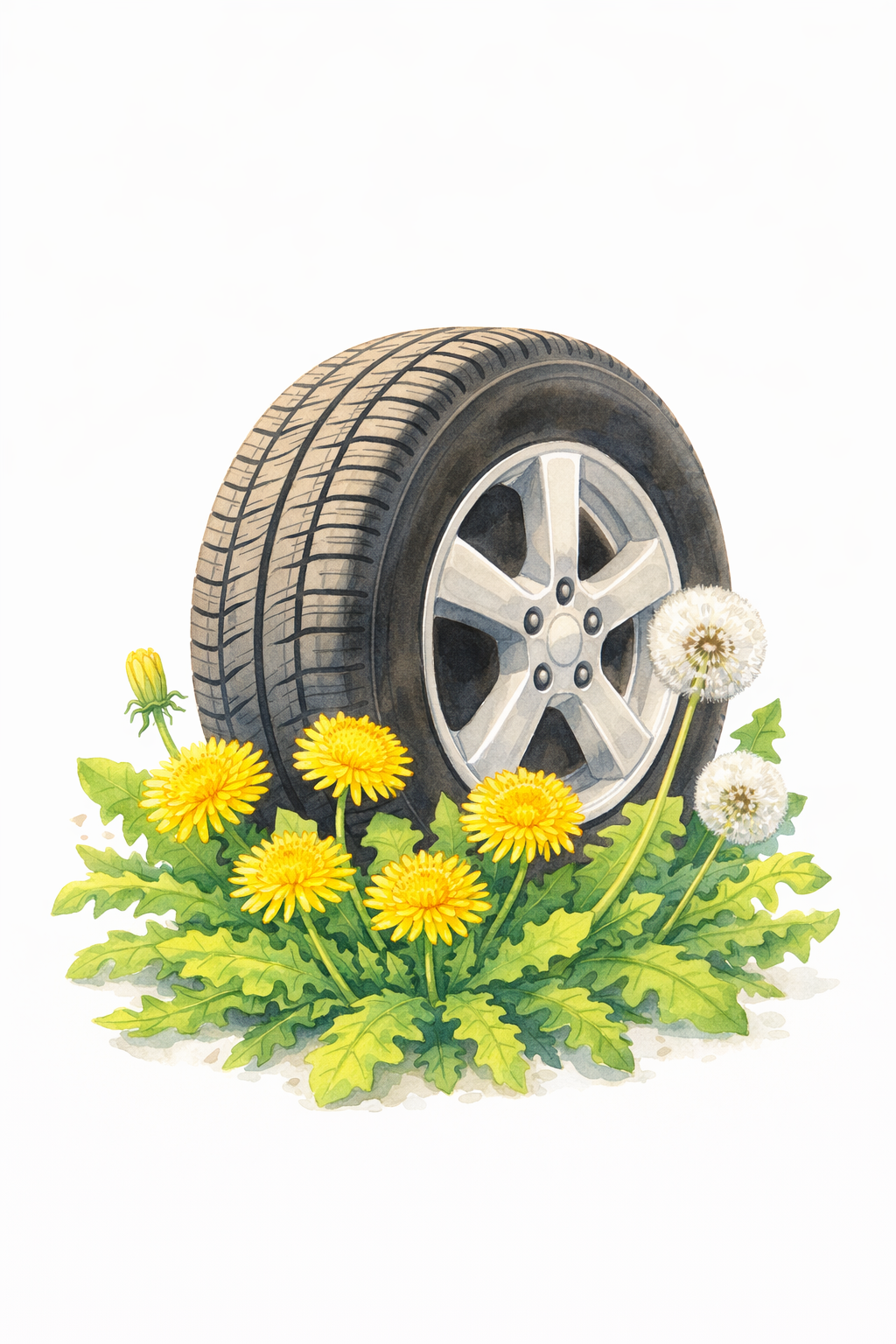
Most British gardeners spend their weekends trying to eradicate dandelions from their lawns. They see a weed; I see a strategic industrial asset. While the world's rubber supply is currently tethered to the fragile "rubber belt" of the equator and the slow, 7-year growth cycle of Hevea brasiliensis, the future of UK transport is being engineered in high-tech aeroponic greenhouses.
Meet the Russian Dandelion (Taraxacum kok-saghyz)
Forget the common yellow weed in your flowerbeds. The industrial future belongs to Taraxacum kok-saghyz. Unlike your garden variety, the roots of this specific Russian species are packed with natural rubber latex of a quality that rivals traditional trees.
Continental Tire is already ahead of the curve with their Taraxagum™ project. They aren't just playing with plants; they've already built test tires that have survived the rigours of track testing.
The Aeroponic Cheat Code
Why is Defra dumping £21.5 million into this now? Because of Precision Horticulture.
Traditional rubber extraction is a mess of soil and slow growth. By moving dandelion cultivation into aeroponic systems (where roots hang in the air and are misted with nutrients), we solve two critical problems:
- Harvest Efficiency: You can harvest the roots cleanly without digging through soil, allowing for a continuous, automated production line.
- Cycle Speed: A rubber tree takes seven years to produce. A Russian dandelion is ready in one year.
Sovereignty at 70mph
The strategic benefits are non-negotiable. Growing our own rubber in places like Dorset or the Fens—on marginal land that isn't even suitable for food—shortens the supply chain from thousands of miles to a few dozen. It reduces CO2 emissions, stabilises prices, and ensures that the UK isn't reliant on tropical regions for its most basic infrastructure.
How Many Dandelions for a Tire?
While Continental keeps their specific "root-to-road" numbers under wraps, their lab systems have already successfully extracted "several kilos" of high-grade rubber from small-scale setups. In a precision-controlled aeroponic environment, we aren't looking at "how many plants" but "how much latex per cubic metre."
We are moving away from the era of "hoping for rain" and into the era of engineered yield.
The SowTimes Verdict
The dandelion is no longer a weed; it’s a bio-reactor. If you want to see the future of British farming, look down at your feet—or better yet, look inside an indoor farm. The rubber meets the road right here. 🎷
The Industrial Kitchen: Dandelion Root "Power" Tea
Before you feed the roots to your local tire factory, you can harvest the leaves for yourself. High in potassium and purely unprocessed.
- Harvest: Clean your dandelion roots (Russian or otherwise).
- Roast: Chop and roast at 180°C until dark and brittle.
- Brew: Grind and steep. It’s a bitter, earthy coffee substitute that reminds you exactly why the soil is your most valuable asset.
No emulsifiers. No hidden sugars. Just the root of the problem. 🎷
Featured in this story
End of Article